
Ludo IA · proposals grounded in the work order
From an unclear request to a reviewable next step.
Ludo IA uses permitted work-order context and evidence to prepare a proposal inside Aibo. The responsible person reviews, corrects, and decides.
Real product · sample data
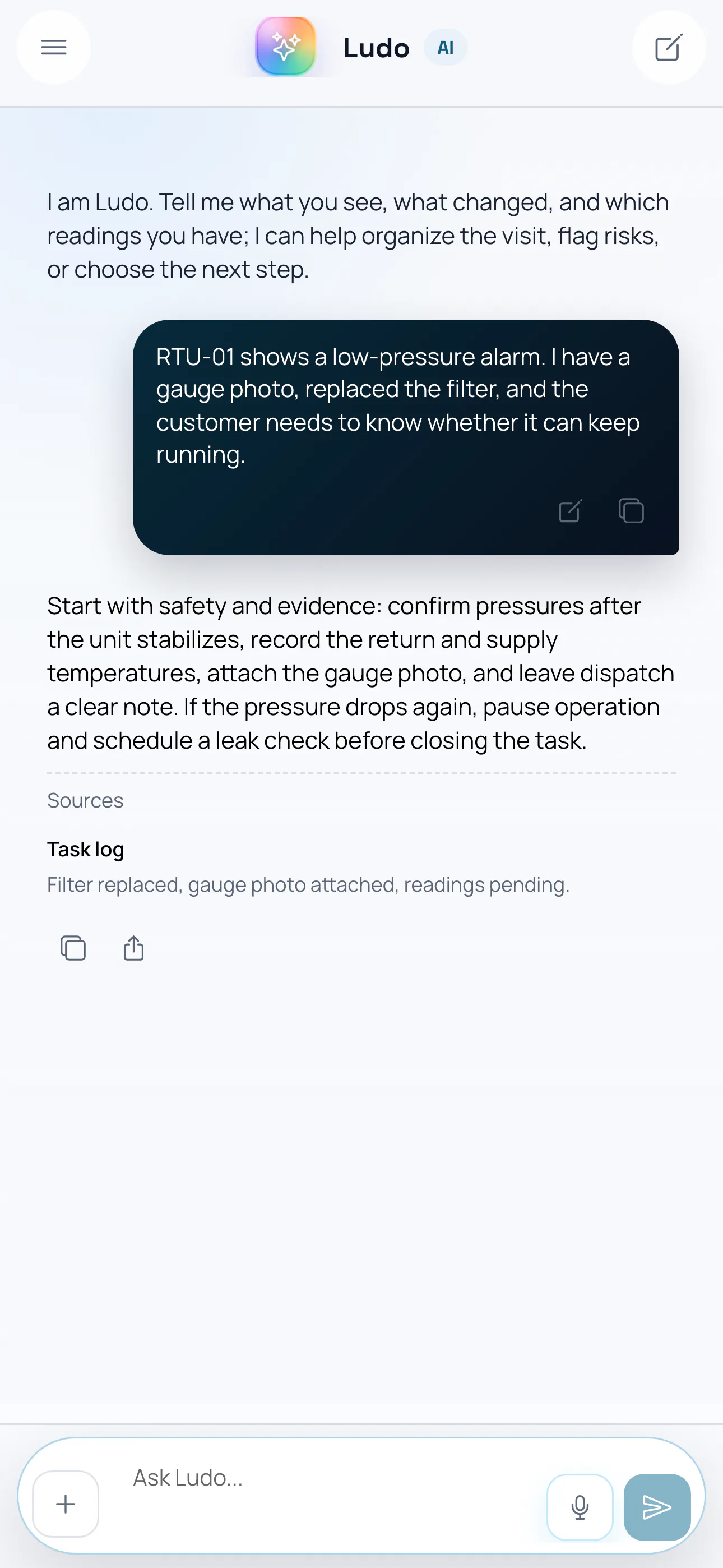

From intake to decision
An ambiguous request becomes a reviewed action.
Ludo IA does not operate from an isolated message. The proposal moves through the same record the team uses.
- Request Aibo organizes what arrived and flags what is missing
- Context Ludo IA reads only permitted work-order sources
- Proposal Prepares the next step without executing it
- Review The responsible person validates or corrects it
- Action The team decides and Aibo keeps the record
Why it is different
The value is not that it answers. It is knowing which record to answer from.
Aibo brings the work together and Ludo IA uses that context within clear boundaries. Each proposal can be reviewed against the work-order record.
- The work order is the source
- Customer, site, asset, task, and history remain connected to the same job.
- Evidence changes the proposal
- Photos, readings, materials, and notes make it possible to surface gaps before closeout.
- The role defines the scope
- Ludo IA only uses context that person is allowed to access in Aibo.
AI with operational boundaries
Human review is not a footnote. It is part of the workflow.
Ludo IA proposals return to technicians, dispatch, or supervision. Aibo keeps sensitive actions behind the appropriate permissions.
Aibo turns context into proposals. Your team keeps the decision.
- Does not approve closeouts on its own
- Does not send messages without review
- Does not change schedules or make financial commitments without authorization
Test the difference
AI works inside the operation, not beside it.
Put a real work order in front of Ludo IA. Set up your operation and see how Ludo IA connects context, evidence, and the next step without taking the decision away from your team.