

1. Classify the reason before calling it rework
A repeat service visit is a visit linked to an earlier job. It may have been planned from the start or requested after closeout. For an independent technician, classification reduces reliance on memory; for a company, it makes comparable cases easier to review without assigning blame before investigation.
First record the reason given by the customer or coordinator. Then compare it with the previous scope and outstanding work. Keep both accounts if the explanation changes during review.
- Planned follow-up: a check agreed during the previous visit.
- Unfinished work: access, materials, or a required authorization were unavailable.
- New request: different equipment, a new need, or scope that requires separate assessment.
- Possible recurrence: the symptom has returned and needs review.
2. Connect the repeat visit to the earlier record
Use a reference that leads to the previous work order and visit. Identify the specific site and asset: the same customer or address does not necessarily mean the same problem. This template also works when one person coordinates and carries out the service.

Repeat visit record template
Previous work order and visit:
Previous date / repeat visit date:
Customer / site / asset:
Current reported symptom and who reported it:
Previously recorded scope and outcome:
Stated reason for returning:
Previous and current evidence:
Suspected cause / confirmed cause and supporting evidence:
Outstanding work or blocker:
Decision and next action:
Person responsible / agreed review date:
3. Fictional example: completing work awaiting a part
A second visit to complete work awaiting a part does not, by itself, establish rework. This fictional example makes the reason, outcome, and next responsibility explicit, without describing a repair or assigning a new cause.
Completed record example — fictional data
Work order: WO-042; visits V-01 and V-02.
Dates: 12 and 15 October.
Customer / asset: North Building / pump B-04.
Previous outstanding item: identified part was unavailable.
Reason for returning: complete work awaiting a part.
Outcome on 15 October: planned task completed; check recorded under the applicable procedure.
Evidence: V-01 note and V-02 final record.
New cause: none assigned; the return was planned.
Next action: the coordinator reviews the record and communicates the outcome to the customer on 16 October.
4. Separate the symptom, hypothesis, and confirmed cause
If a customer reports a noise again, record what they describe, when it began, and under which conditions. “The same noise has been reported” describes a symptom. “The previous repair caused it” assigns a cause that needs evidence. Copying a note into another work order must not turn a suspicion into a diagnosis.
Compare the previous scope, observations, checks, and limitations. If the cause remains unconfirmed, record the missing information and who will review it. A new request or scope change must also be identified before deciding what work comes next.
5. Look for patterns without combining different cases
Start with ten repeat visit cases from the same period and service type. Define whether each record represents a work order or a visit; avoid switching between the two. Group the reasons and retain an “unconfirmed” category when the evidence is insufficient.
The review may reveal incomplete access instructions or materials that frequently remain outstanding. It is not a company-wide rework rate: that calculation would need the total number of comparable jobs and a shared definition. Use what you find to improve a specific preparation step, then review whether the records became clearer.
6. Preserve context for the next decision
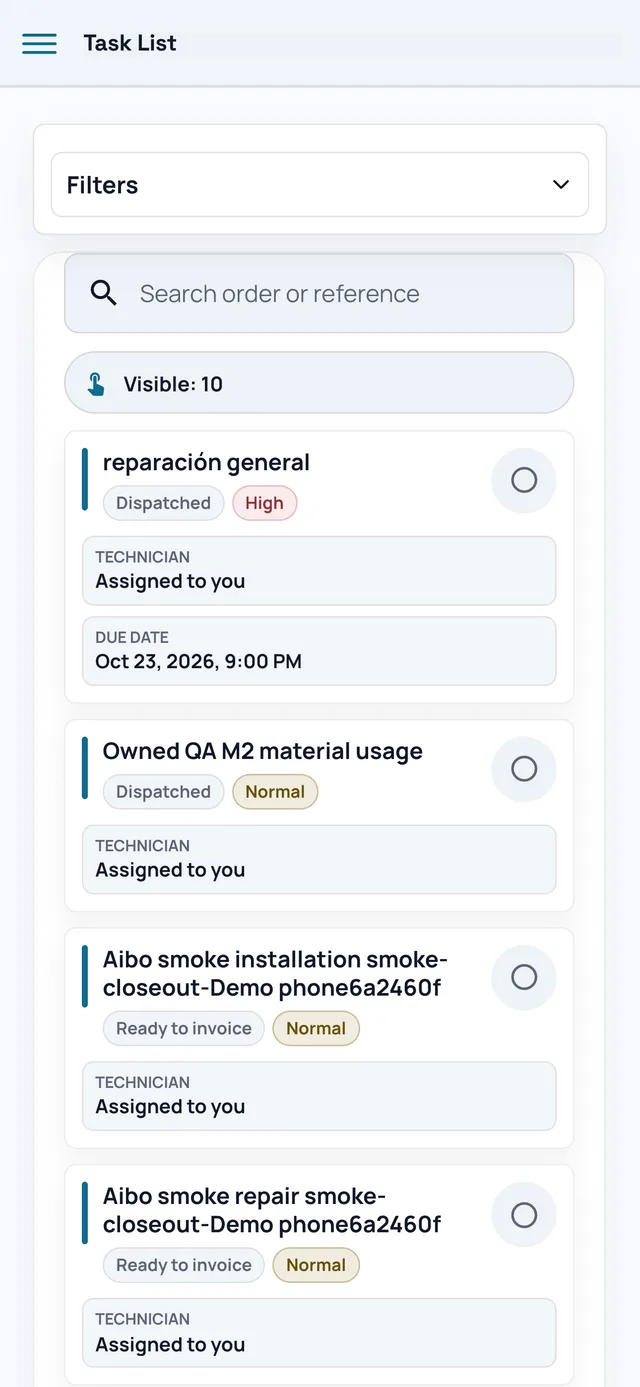
In Aibo Task, keep the customer, site, asset, work order, and evidence with the relevant job. Explain the reference to the earlier service in the repeat visit record. Technical review and the decision on what happens next remain with the people responsible.